Plant care, sensed

Monstera

Monstera deliciosa · also known as Fruit-salad-plant

Native to: Mexico (Veracruz, Oaxaca, Chiapas) to Guatemala

Monstera deliciosa, the Swiss cheese plant or split-leaf philodendron is a species of flowering plant. The common name "Swiss cheese plant" is also used for the related species from the same genus, Monstera adansonii. The common name "split-leaf philodendron" is also used for the species Philodendron bipinnatifidum.
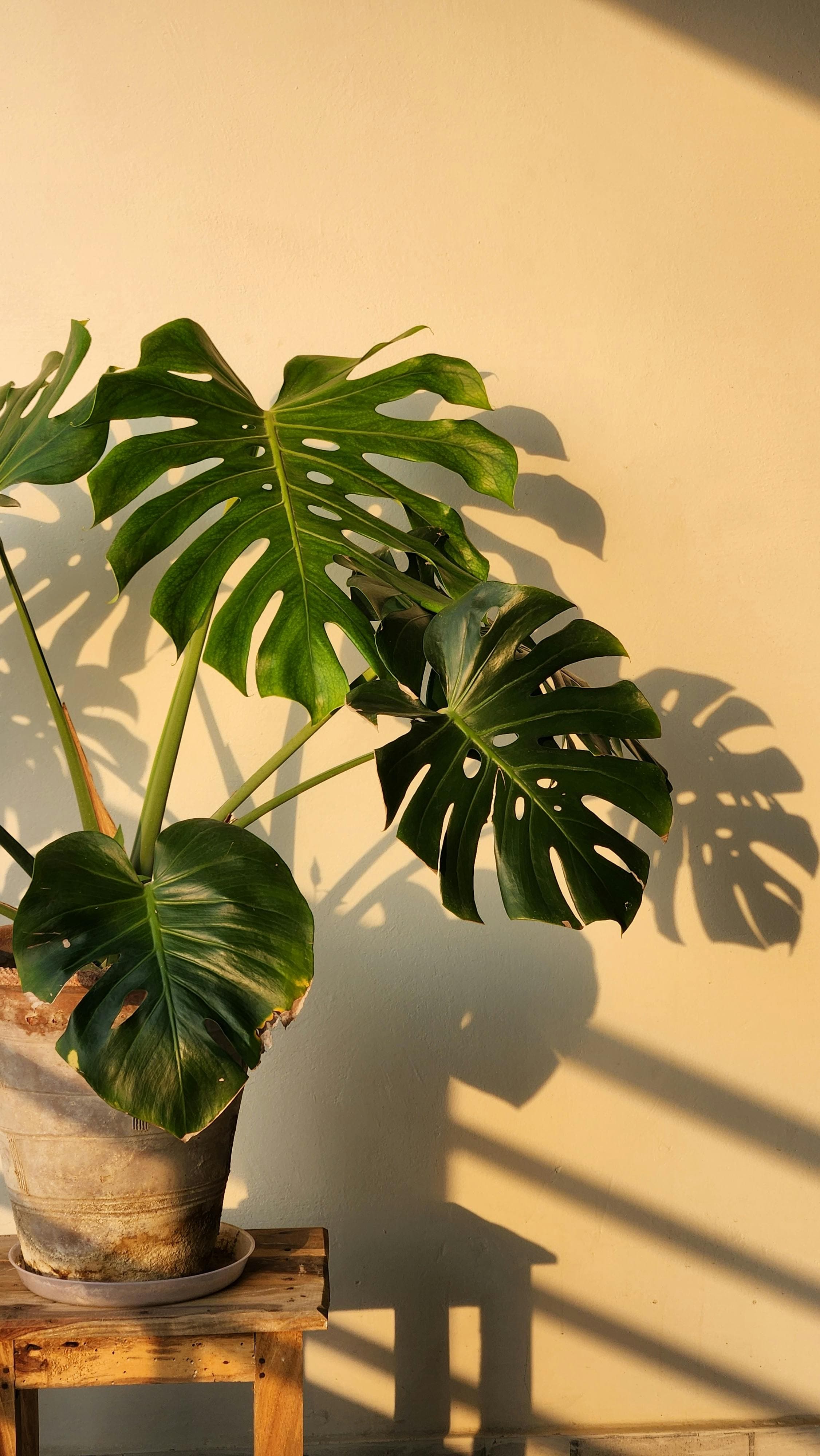
Monstera

Photo: Shiraz Mahmood / Pexels

The sensor knows

What Plant Mate watches for on your monstera.

Each target is sourced from horticultural guidance, quoted in full so you can see exactly where the numbers come from.

  • Ambient temperature

    20–30 °C (68–86 °F)

    It prefers bright indirect light and temperatures of 20–30 °C (68–86 °F).

    From Wikipedia: Monstera deliciosa

  • Light

    Bright indirect — no direct sun

    It needs very bright exposure, but not full sun.

    From Wikipedia: Monstera deliciosa

  • Watering cadence

    When the top of the soil dries — about every 1–2 weeks

    It is usually watered when the soil has slightly dried out (after around one or two weeks).

    From Wikipedia: Monstera deliciosa

  • Soil

    Well-draining, peat-based, with perlite and bark

    It requires a well-draining, peat-based soil to thrive, such as a soil made with perlite and pieces of bark.

    From Wikipedia: Monstera deliciosa

Plant Mate, translated

What each face means for monstera.

The mascot on the e-ink screen reflects what the sensor sees. Here’s when each expression shows up, and why.

happy

Inside the targets — warm, bright indirect light, soil moist.

It prefers bright indirect light and temperatures of 20–30 °C (68–86 °F).

thirsty

Soil's been dry past the 1–2 week mark.

It is usually watered when the soil has slightly dried out (after around one or two weeks).

cold

Ambient dropped below the safe minimum.

Growth ceases below 10 °C (50 °F) and it is killed by frost. A steady minimum temperature of at least 13–15 °C (55–59 °F) is preferable.

sunburnt

Direct sun detected at the leaves.

It needs very bright exposure, but not full sun.

The grounding

Wikipedia’s cultivation guide for monstera.

Quoted in full so you can see exactly what every Plant Mate target above is anchored to. Sourced from Wikipedia, released under CC BY-SA 4.0.

Indoor cultivation

Its architectural qualities, ease of cultivation, and tolerance of a wide range of conditions make it widely cultivated indoors. For this reason it is a popular plant for the home or office throughout the temperate northern hemisphere. It prefers bright indirect light and temperatures of 20–30 °C (68–86 °F). It is usually watered when the soil has slightly dried out (after around one or two weeks). It requires a well-draining, peat-based soil to thrive, such as a soil made with perlite and pieces of bark. Flowering is rare when grown indoors. In the UK Monstera deliciosa and the cultivar 'Variegata' have gained the Royal Horticultural Society's Award of Garden Merit.

Cultivation

Monstera deliciosa is commonly grown outdoors as an ornamental plant in the tropics and subtropics. The plant requires a lot of space and a rich and loose soil (ideally garden soil and compost in equal parts). If it grows in the ground it is better to plant it near a tree, where it can climb, if not against a trellis. It is a "moderately greedy plant", in that it needs to be watered just to keep the soil slightly moist. Its hardiness is 11 (that is to say the coldest at −1 °C or 30 °F). It cannot withstand these temperatures for more than a few hours, but it can live outside in certain temperate regions (Mediterranean coast, Brittany). A steady minimum temperature of at least 13–15 °C (55–59 °F) is preferable, allowing continuous growth. Growth ceases below 10 °C (50 °F) and it is killed by frost. It needs very bright exposure, but not full sun. Forcing a M. deliciosa to flower outside of its typical tropical habitat proves to be difficult. Specific conditions need to be met for the plant to flower. However, in its tropical and subtropical habitat, the plant flowers easily. In ideal conditions it flowers about three years after planting. The plant can be propagated by taking cuttings of a mature plant or by air layering. Indoor cultivation Its architectural qualities, ease of cultivation, and tolerance of a wide range of conditions make it widely cultivated indoors. For this reason it is a popular plant for the home or office throughout the temperate northern hemisphere. It prefers bright indirect light and temperatures of 20–30 °C (68–86 °F). It is usually watered when the soil has slightly dried out (after around one or two weeks). It requires a well-draining, peat-based soil to thrive, such as a soil made with perlite and pieces of bark. Flowering is rare when grown indoors. In the UK Monstera deliciosa and the cultivar 'Variegata' have gained the Royal Horticultural Society's Award of Garden Merit.

Plant facts

Scientific name
Monstera deliciosa
Common name
Fruit-salad-plant
Family
Araceae
Genus
Monstera
Native range
Mexico (Veracruz, Oaxaca, Chiapas) to Guatemala

Taxonomy and image courtesy of Trefle. Cultivation guidance from Wikipedia.

Let Plant Mate do the watching.

Reserve your spot for $1. Refundable anytime, applied to your Kickstarter pledge. The sensor takes care of the numbers. You just check the face.